Financial stress is the quiet constant in many people's lives — not because they earn too little, but because their financial position lacks resilience. The most common trigger isn't an extravagant lifestyle; it's an unplanned expense: a boiler breaks, a car needs repairs, a job ends unexpectedly. Without a cash buffer, these ordinary life events become crises. Building an emergency fund is the foundation of financial stability — and it's the single most impactful financial action most people can take.
The concept is simple but the psychology and practicalities require more thought than the headline advice ("save three to six months of expenses") suggests. This guide works through the how systematically, addressing the obstacles that derail most attempts before they gain momentum.
Why an Emergency Fund Isn't Optional
Consider the chain of consequences when an unplanned expense hits without a cash buffer. The likely response is a credit card (average UK rate: 22% APR), an overdraft (often 39% EAR or more), or a personal loan. Each of these converts a one-off expense into an ongoing debt with interest, compounding the financial pressure for months or years. An emergency fund breaks this chain entirely: the expense is absorbed, the account replenishes, and no debt is created.
The psychological benefit is equally significant. Research on financial anxiety consistently finds that having savings — even modest ones — substantially reduces stress and improves decision-making quality. People with a financial cushion make better choices because they're not operating from a scarcity mindset that narrows focus and depletes cognitive resources. The emergency fund is not just a financial tool; it's a mental health investment.
How Much Do You Actually Need?
The standard advice of "three to six months of living expenses" is a reasonable long-term target but an unhelpful starting point if you currently have nothing saved. The first milestone is £500–£1,000 — enough to cover the most common single-incident emergencies (a broken appliance, a car repair, an unexpected bill). This is reachable for most people within a few months and provides immediate psychological relief.
The appropriate long-term target depends on your circumstances. If you have a highly stable job, a partner with income, and no dependants, three months of essential expenses may be sufficient. If you're self-employed, have a volatile income, have dependants, or are in a sector with higher redundancy risk, six months or more is more appropriate. "Living expenses" in this context means essential costs only: rent or mortgage, utilities, food, transport, and minimum debt payments — not total spending.
Step 1: Know Your Number
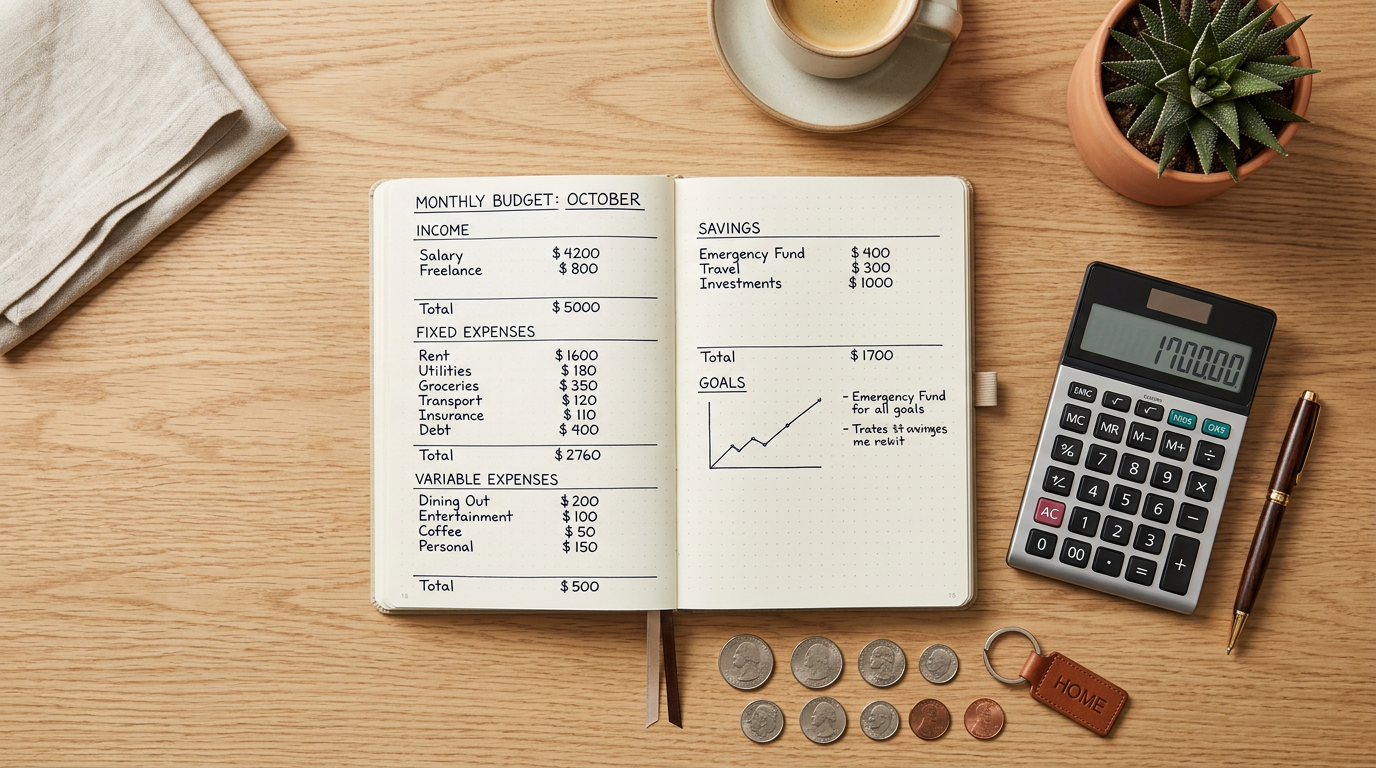
Before you can build an emergency fund, you need to know what a month of essential living expenses actually costs. This requires a brief but necessary exercise: listing your monthly rent or mortgage, council tax, utility bills, food spending, transport costs, and minimum debt payments. For most people, this total is lower than their intuitive estimate — because it excludes the discretionary spending (subscriptions, eating out, entertainment) that makes up a large share of most people's outgoings but isn't actually essential.
Knowing your essential monthly expenses gives you a concrete target. Multiply it by three or six, and you have your long-term emergency fund goal. Divide it in half or a third, and you have a short-term milestone to aim for first.
Step 2: Open a Dedicated Account
Emergency fund money should not live in your current account. Commingling savings with spending money makes both invisible — you lose track of how much is savings and how much is discretionary, and the money gets spent. Open a separate easy-access savings account, ideally with a different bank from your current account (creating a small friction barrier that discourages impulse spending), and name it specifically: "Emergency Fund" or similar.
In the current UK interest rate environment, easy-access savings accounts offer meaningful rates — compare options on comparison sites to ensure you're earning reasonable interest. The money needs to be accessible within a few days, so fixed-term bonds aren't appropriate here, but the best easy-access rates are worth seeking out.
Step 3: Automate a Regular Transfer
Saving what's left at the end of the month is the least effective savings strategy. Whatever is left tends to be zero, or close to it. The alternative — automating a transfer on the day your salary arrives, before the money is available to spend — reliably produces savings. The amount matters less than the consistency: £50 per month is £600 per year. Even starting with £20 per month builds the habit and the account.
Set up a standing order for the day after your salary payment date. Review the amount quarterly and increase it whenever you can — pay rises, ends of other financial commitments, or reduction in spending. The compound growth of a savings habit is not primarily about interest rate; it's about consistent contributions over time.
Step 4: Accelerate with Windfalls
Any financial windfall — a tax refund, a bonus, a gift, cash back from a sale — is an opportunity to fast-track your emergency fund. Treating a proportion of every windfall as savings, rather than spending, dramatically accelerates the timeline. A simple rule — save at least half of every unexpected sum — is easy to apply and doesn't feel punitive because the money wasn't expected anyway.
Step 5: Recover After Use
The emergency fund only works if you use it for genuine emergencies and then replenish it afterwards. This requires treating replenishment as a financial priority equal to any other obligation. The moment you use the fund, restart or increase your automatic transfer to rebuild it. Having a depleted emergency fund creates the same financial vulnerability as having none — so the restoration is time-sensitive.
Define in advance what constitutes an emergency. Job loss, major medical expense, essential home or car repair, and bereavement-related costs qualify. Holidays, new electronics, and concert tickets do not. Having a clear definition prevents the rationalisation that tends to erode savings accounts that lack a designated purpose.
"Financial security is not built by earning more — it's built by ensuring that saving comes first, before spending fills the available space." — FiscalTime Finance Desk
Building an emergency fund is not a glamorous financial goal. It doesn't compound aggressively like investments, and it doesn't feel as exciting as paying off debt. But it is the prerequisite for everything else in personal finance: without it, any financial progress is vulnerable to being wiped out by the next unexpected event. With it, you have the stability from which every other financial goal becomes genuinely achievable.
Disclaimer: This article is for informational and educational purposes only. It does not constitute regulated financial advice. Individual financial circumstances vary significantly. Please consider consulting an independent financial adviser authorised and regulated by the Financial Conduct Authority (FCA) before making significant financial decisions.