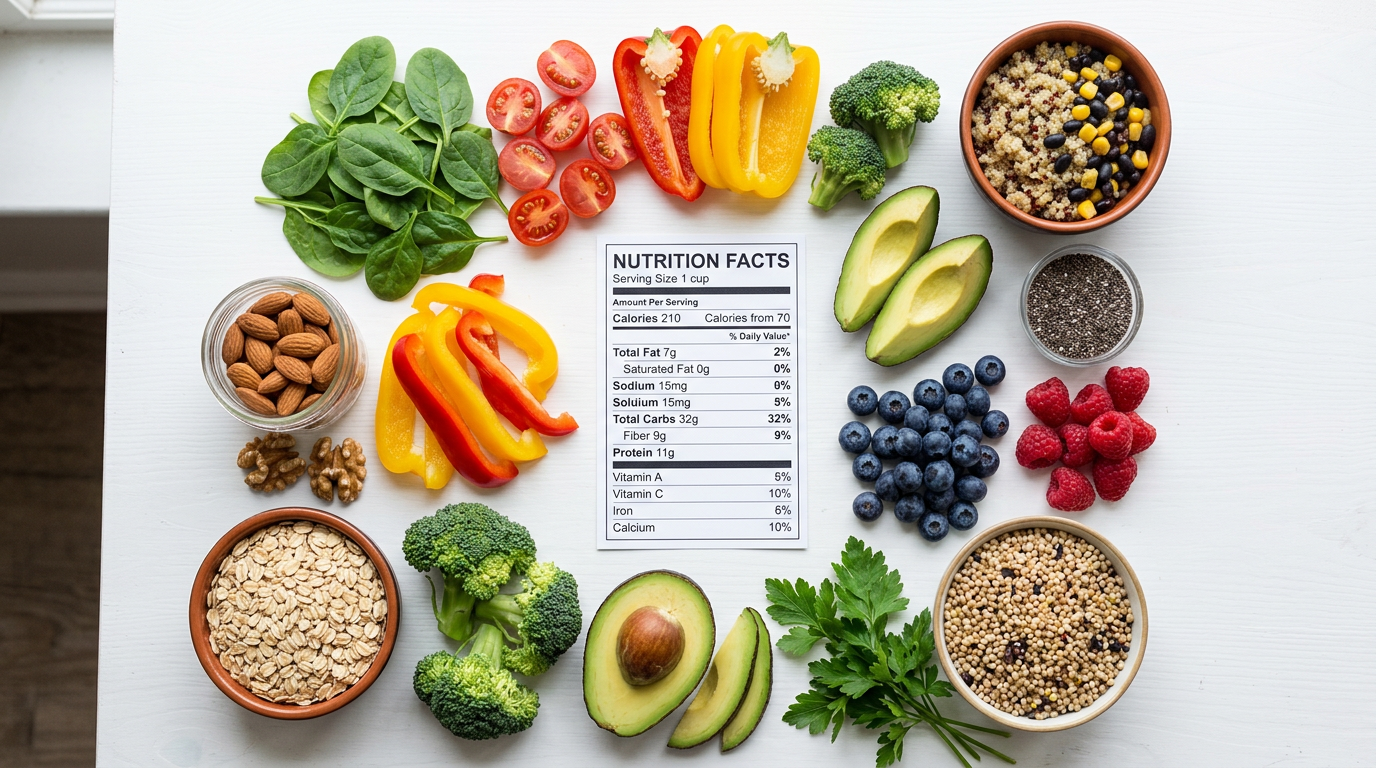
The nutrition label is one of the most useful tools available to anyone trying to make informed choices about what they eat — and one of the most consistently misread. Food manufacturers have become expert at making products appear healthier than they are, using labelling conventions to their advantage. Understanding what the numbers actually mean, and what the front-of-pack claims don't tell you, is a genuinely valuable life skill.
In the UK, nutrition labels are regulated by the Food Standards Agency and must follow standardised formats. All pre-packaged foods must display energy, fat, saturated fat, carbohydrate, sugars, protein, and salt per 100g (or 100ml for liquids) and per serving. The per-100g column is generally more useful for comparison purposes, as serving sizes are often defined in ways that flatter the product.
Energy: Calories Explained
UK nutrition labels express energy in both kilojoules (kJ) and kilocalories (kcal). When people talk about "calories" in everyday conversation, they mean kilocalories. The daily reference intake for an average adult is 2,000 kcal, though this varies significantly with age, sex, weight, and activity level. Labels that show energy as a percentage of reference intake (%RI) are basing this on the 2,000 kcal figure — useful as a rough guide but not precise for everyone.
A common mistake is to focus exclusively on calorie counts without considering the nutritional quality of those calories. 200 kcal from oily fish provides protein, omega-3 fatty acids, and multiple micronutrients. 200 kcal from a biscuit provides primarily refined carbohydrates and saturated fat, with minimal nutritional value beyond the energy itself. Calorie counting has a place in weight management, but using it as the sole metric of food quality is misleading.
Fat: Total, Saturated, and Unsaturated
The total fat figure includes all types of fat — saturated, unsaturated (monounsaturated and polyunsaturated), and trans fats. The figure you most need to pay attention to is saturated fat, which is listed separately. Dietary guidelines recommend limiting saturated fat to no more than 20g per day for women and 30g for men. High saturated fat intake is associated with raised LDL cholesterol and increased cardiovascular disease risk.
The presence of unsaturated fats — particularly the omega-3 polyunsaturated fats found in oily fish, walnuts, and flaxseed — is associated with cardiovascular benefit. Unfortunately, these are not always broken out separately on standard UK labels. Products carrying a health claim about omega-3 content are required to state the specific amount, which makes comparison easier.
Sugars: Free vs Natural
The "carbohydrates" row on a nutrition label includes both starch and sugars. The "of which sugars" sub-row is important but requires interpretation. In the UK, this figure includes both free sugars (added sugars plus sugars in honey, syrups, and fruit juices) and naturally occurring sugars in whole fruit, vegetables, and dairy. The distinction matters because the public health guidance on sugar reduction specifically targets free sugars, not naturally occurring ones.
A plain yoghurt with 8g of sugars per 100g and a flavoured yoghurt with 14g per 100g are not directly comparable — the plain yoghurt's sugars are almost entirely from lactose (naturally occurring), while the flavoured yoghurt's additional 6g likely comes from added sugar. Reading the ingredients list alongside the nutrition table clarifies this: if sugar, glucose syrup, or similar appear in the first few ingredients, the product contains substantial added sugar.
Salt vs Sodium
UK labels use salt rather than sodium (an older convention still used in the US). Salt is sodium chloride, and the salt figure on a label is calculated by multiplying the sodium content by 2.5. The recommended daily maximum for adults is 6g of salt. High salt intake is associated with raised blood pressure and increased stroke and heart disease risk. Bread, breakfast cereals, ready meals, and processed meats are the largest sources of dietary salt in the UK — often containing more than fresh foods that taste far saltier.
Traffic Light Labels
Many UK supermarket products carry front-of-pack "traffic light" labels showing colour-coded ratings (red/amber/green) for energy, fat, saturated fat, sugars, and salt per serving. These are voluntary but widely adopted. They provide a quick visual summary useful for rapid comparison between similar products. Red indicates a high level (above 17.5g fat, 5g saturated fat, 22.5g total sugars, or 1.5g salt per 100g), amber is medium, and green is low.
The traffic light system is genuinely useful but should be used in context. Olive oil will show red for fat — but that fat is primarily monounsaturated and has established health benefits. Whole milk will show red for saturated fat but provides calcium, protein, vitamins A, D, and B12, and iodine. A product that shows green across all five categories is not necessarily a nutritious choice if it's nutrient-poor (e.g. plain rice cakes show green for everything but contribute little nutritionally beyond carbohydrate).
The Ingredients List: Your Best Friend
Ingredients are listed in descending order by weight. This means the first ingredient is the largest by mass. A product that lists "sugar" as its first or second ingredient is primarily a sugar delivery vehicle, regardless of what the front-of-pack marketing claims. A fruit product that lists "water, sugar, fruit juice concentrate" rather than actual fruit is essentially a sugar syrup with fruit flavouring.
Looking for whole foods early in the ingredients list — real meat, whole grains, actual vegetables — is a reliable proxy for nutritional quality that transcends the specific numbers in the nutrition table. Processing tends to move ingredients away from whole foods and towards concentrated extracts, refined starches, and additives. The longer and more chemical the ingredients list, the more processed the product.
You don't need to analyse every food label in detail every time you shop — that would be exhausting and counterproductive. But developing a general familiarity with how labels work means you can quickly identify when a product is genuinely nutritious versus when it's making you feel healthy through clever marketing while delivering limited real nutritional value.
Disclaimer: This article is for general informational purposes only and does not constitute dietary or medical advice. Individual nutritional needs vary based on age, health status, and other factors. For personalised dietary guidance, please consult a registered dietitian or your GP.